

TLDR
- CDR Pompe It manufactures lined acid pumps for corrosive magnetic drive mechanical seal and toxic fluids in the chemical and pharmaceutical industries.
- The transfer molding coating guarantees high quality and total fluid insulation in the most critical environments.
- The DTN (ISO and ASME) range, coming out in 2025, adopts the dynamic shaft for greater reliability and less axial thrust along the entire curve.
- It magnetic drive ensures a leak-free system even in the event of a breakdown, with less maintenance, reduced operating costs, and improved energy efficiency.
- Steel pumps, such XTS as the UTS-EVO, are used corrosive liquids only in rare cases and if the chemical compatibility allows it.
Index
Acid pumps are fundamental devices in the chemical and pharmaceutical industries, designed to safely handle extremely corrosive and toxic fluids. Since these fluids are so dangerous and delicate, choosing the right pump becomes even more crucial to ensure operational efficiency and workplace safety.
We at CDR Pompe offers A vast range of solutions for handling aggressive fluids. Our lined, magnetically driven, and mechanically sealed pumps are designed for specific customer requirements and guarantee safety and reliability for industrial corrosive liquids.
Efficient solutions for a wide range of industrial acids
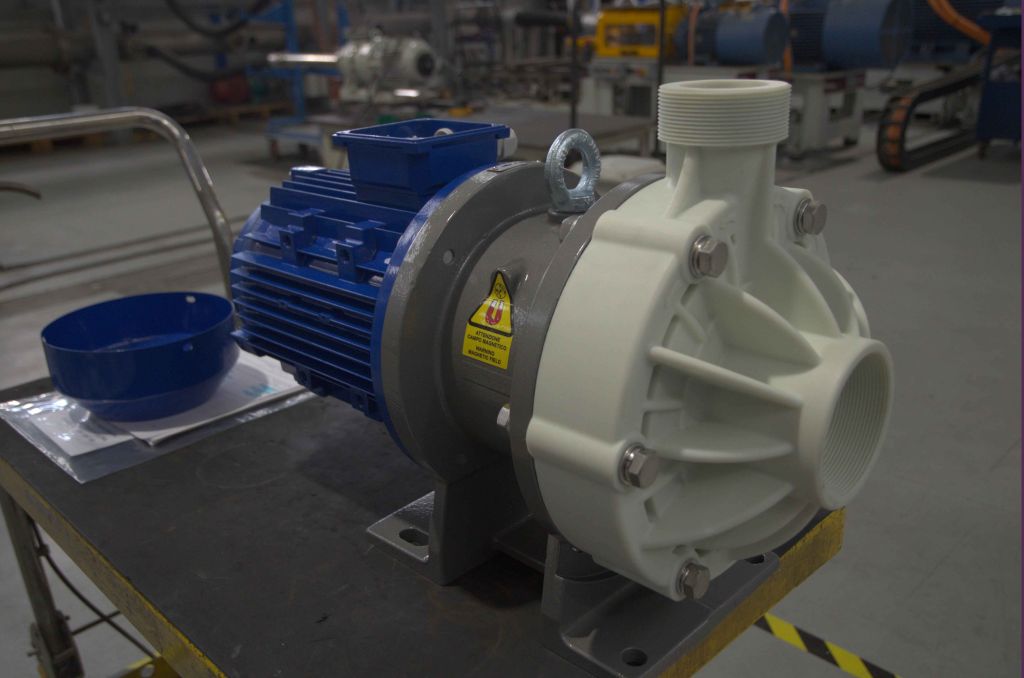
Selecting the appropriate pump depends on various factors, including the nature of the fluid to be handled, the operating temperature, and the specific requirements of the industrial process. Specifically, in the chemical and pharmaceutical sectors, these are the most common corrosive liquids that are used and handled:
- Nitric acidIt is a highly corrosive and oxidizing strong mineral acid, used in the production of fertilizers, explosives, and in metal processing.;
- Hydrochloric acid: A highly corrosive inorganic acid used in industrial cleaning, water treatment, the production of chlorides, and the food industry to adjust pH;
- Phosphoric acidA medium-strong acid used in fertilizers, carbonated drinks, detergents, and rust removal. It also finds application in the pharmaceutical and food industries as an additive.
- Sulfuric acid: One of the most widely used acids in the industrial sector, it is used in the production of fertilizers, batteries, oil refining, and chemical processes;
- Acetic acid: Known as the main component of vinegar, it is used in the food industry, in the production of solvents and plastics, and as a chemical reagent;
- Lactic acidAn organic acid that is naturally formed in muscles during physical activity and is used in the food, cosmetic, and pharmaceutical industries, as well as in the production of bioplastics.;
- Citric acid (for water sector)Used in water treatment to regulate pH and prevent scaling, it is an organic acid naturally found in citrus fruits and also used in eco-friendly detergents.;
- Formic acid (from which formaldehyde is derived)Organic acid naturally present in the secretions of some insects, it is used in tanning hides, as a preservative, and in the synthesis of formaldehyde for industrial applications.
- Hydrocyanic acidA highly toxic and volatile compound used in chemical synthesis and metallurgy for gold extraction. It is known for its dangerousness and its historical use in chemical weapons.
Acid Pumps: Safety with Transfer Molding Technology
As we have extensively explained in this article, the lining of a pump through the technology of Transfer molding, transfer molding, guarantees a very high quality above all in those more critical environments that require the Total isolation of the content.
CDR acid-lined pumps utilize both magnetic drive technology and mechanical seals.
Magnetic drive pumps for acids, lined
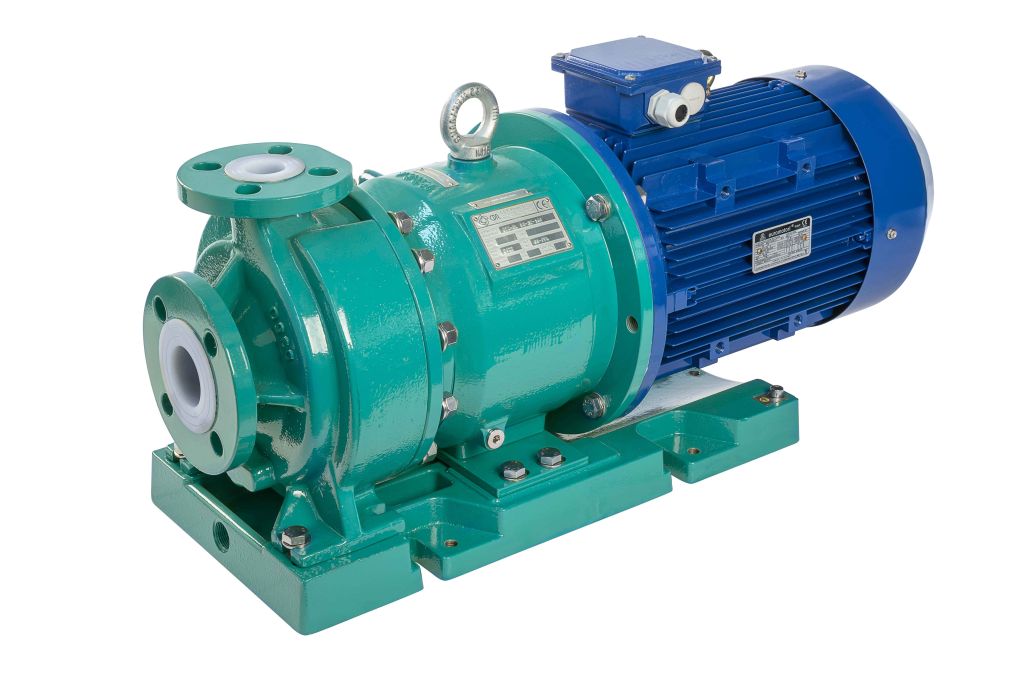
Precisely because of these efficiency and safety features, CDR lined pumps are ideal for handling acids used in chemical and pharmaceutical applications. For example, our new line DTN (DTN ISO e DTN ASME), released in 2025, uses the latest industry technologies: thanks to the new dynamic shaft execution, it guarantees greater pump reliability minor axial thrust along the entire performance curve.
Magnetic drive pump ETN EVO, however, is perfect for pumping aggressive and dangerous liquids, even slightly contaminated and with low viscosity. Just like the ETN EVO, the acid pumps UTN (UTN-L and UTN-BL) are made in ductile cast iron lined, or an acid-resistant material, and are often used to cover critical process applications in all areas of the chemical industry.
Always using magnetic propulsion, the HTN is a plastic-coated peripheral pump, particularly in demand for all applications with low flow rates but high heads: it represents, in fact, the elite of horizontal turbine pumps.
Finally, the pump Series X, the XTN, suitable for applications with corrosive, toxic, or hazardous liquids, and also for the treatment of fluids containing solids, they are also ideal in cases where a pump complying with ATEX directives is required (specifically, ATEX Zone 1 (indoor and outdoor).
Lined mechanical seal pumps
Not only magnetic drive pumps, but also mechanical seal pumps are ideal for handling corrosive fluids. Made from various materials, including PP (polypropylene), PVDF (polyvinylidene fluoride) e PFA (perfluoroalkoxy), depending on the specific requirements of the process and the type of fluid to be managed, they offer extreme technical precision and safety in the work environment.
The series UCL, coated in plastic and fluoroplastic material, is specific for pumping corrosive, aggressive, and hazardous liquids for the chemical, petrochemical, and pharmaceutical industries. Its hydraulics are also the same as the magnetic drive series. UTN.
Continuing to talk about mechanical seals, the model CCL/CCL-B It is characterized by a lined coating of the wetted parts in polypropylene thanks to transfer molding technology and it is also one of the most customizable in our catalog.
Acid pumps in steel
In rare cases and when chemical compatibility allows, our magnetic drive pumps made of steel can also be used for handling corrosive liquids. In particular, the pump in the series XTS It is suitable for ATEX zones and heavy, continuous services for major industrial applications such as chemical and pharmaceutical.
We kept the pump for last UTS-EVO, which represents the top-of-the-line among CDR's best-selling products. It is an extremely customizable pump suitable for many different fields of application, including the handling of corrosive fluids.
The reliability of magnetic drive
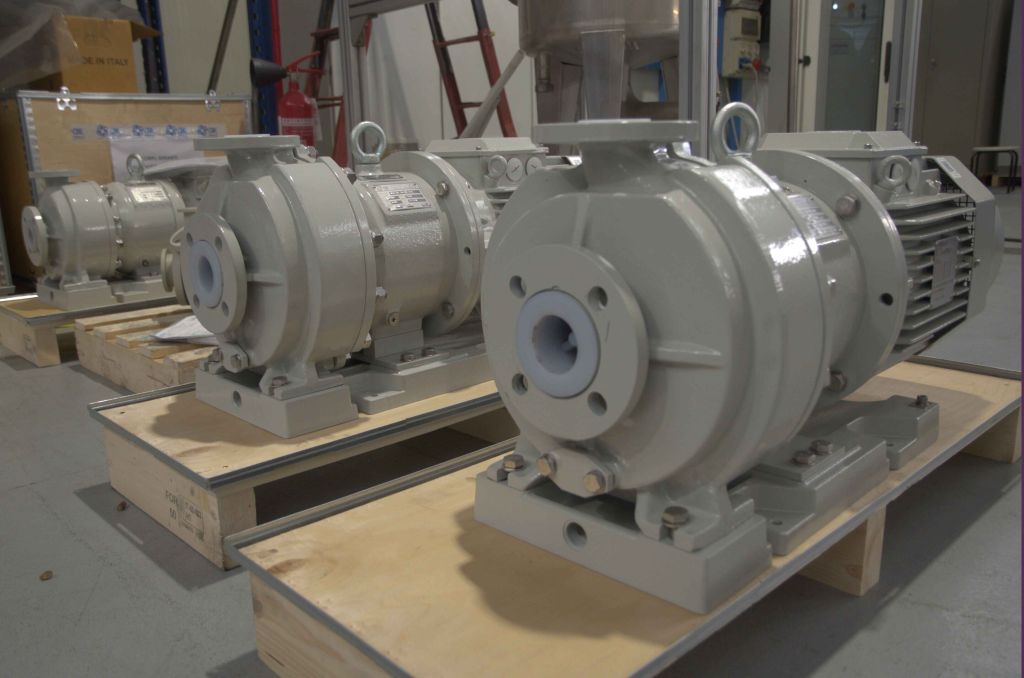
In many of our articles, we have emphasized the qualities of magnetic drive technology as the best sealless drive technology for process pumps. Even for acid pumps, magnetic drive is perfect for both safety and the efficiency of the plant as a whole, reducing the need for maintenance and operating costs.
For example, the particular magnetic drive technology ensures a leak-proof installation even in the event of a rupture, safeguarding both the product and the work environment. Magnetic drive also guarantees better energy efficiency compared to other variants, promoting savings in both economic terms and environmental emissions.
We at CDR we offer a vast range of solutions for fluid handling. The technology of Transfer molding offers extremely sophisticated and efficient solutions even for acid pumps, where safety is the main concern.
Schedule an appointment To discover our full offering: we guarantee the highest quality solutions while respecting the needs of all our clients.
Frequently Asked Questions
Which CDR pumps are suitable for handling corrosive acids in the chemical and pharmaceutical industry?
CDR Pompe It offers lined pumps lined a magnetic drive and a pumps mechanical seal, plus some steel pumps for specific applications. For the magnetic drive latter there are the DTN, ETN EVO, UTN, HTN and XTN. For the mechanical seal latter there are the UCL and CCL/CCL-B. The choice depends on the fluid, temperature and process.
Which industrial acids can be pumped with CDR acid pumps and how to choose the model?
CDR pumps handle acids such as nitric, hydrochloric, phosphoric, sulphurous, acetic, lactic, citric, formic and cyanide. The choice of model depends on the nature of the fluid, the operating temperature and the requirements of the process. These factors determine the sealing technology and the materials of the wet parts, for example PP, PVDF or PFA.
What is transfer molding and why is it useful in the production lined pumps of acids?
Transfer molding, or transfer molding, is the technology used to coat the parts of a pump with a wet coating. It guarantees a very high quality of the coating and the total insulation of the contained fluid, so it is useful in the most critical environments. CDR uses it, for example, in the CCL/CCL-B model with a polypropylene coating.
What advantages does a pump have magnetic drive mechanical seal over fluids that are acidic?
The pump magnetic drive guarantees a leak-free system even in the event of a breakdown, protecting the product and the working environment. It also reduces the need for maintenance and management costs. It also has better energy efficiency compared to other variants, with economic savings and lower emissions.
What materials are available for CDR mechanical seal pumps coated materials corrosive liquids?
The CDR mechanical seal pumps coated liners are made of PP (polypropylene), PVDF (polyvinylidene fluoride) and PFA (perfluoroalkoxy), depending on the process and the fluid. The UCL series is made of plastic and fluoroplastic material, with the same hydraulics as the magnetic UTN series. The CCL/CCL-B is coated with polypropylene.
Are there CDR acid pumps that are ATEX-compliant or made of steel for corrosive fluids?
Yes. The XTN, with magnetic drive its internal and external cladding, complies with the ATEX Zone 1 internal and external directives and also handles liquids and solids. The steel XTS and UTS-EVO pumps are used corrosive liquids only in rare cases, when chemical compatibility allows it. The XTS is suitable for ATEX zones and heavy, continuous service.