
SUMMARY
The article explores the crucial importance of properly aligning a centrifugal pump to ensure efficiency, safety, and long service life in industrial systems. It highlights how this operation, often seen as a simple technical detail, is actually essential to prevent abnormal vibrations, component damage, and increased maintenance and energy consumption costs.
It explains the two main types of alignment—angular and parallel—and emphasizes the effectiveness of advanced techniques such as laser alignment, which ensure precision and reliability. The article also presents the strategic role of CDR Pompe’s Service department, which offers specialized assistance both in the workshop and directly on-site, with customized inspections, adjustments, and testing.
It then describes the added value of the kick-off meeting, during which the customer and supplier jointly define all operating parameters and required services, ensuring rigorous oversight throughout the pump’s entire life cycle. Finally, it highlights the different pump series that are particularly sensitive to alignment, stressing the importance of scheduled maintenance to maintain high levels of performance and safety.
The article serves as a comprehensive guide for companies that want to optimize the management of their centrifugal pumps and ensure uninterrupted production.
WHY CORRECT ALIGNMENT OF A CENTRIFUGAL PUMP IS IMPORTANT
Correct alignment of a centrifugal pump is one of the most important steps to ensure efficiency, safety, and a long operational life. Beyond directly affecting performance quality, system stability, and the mechanical integrity of components, alignment has a decisive impact on operational continuity and reduced maintenance costs.
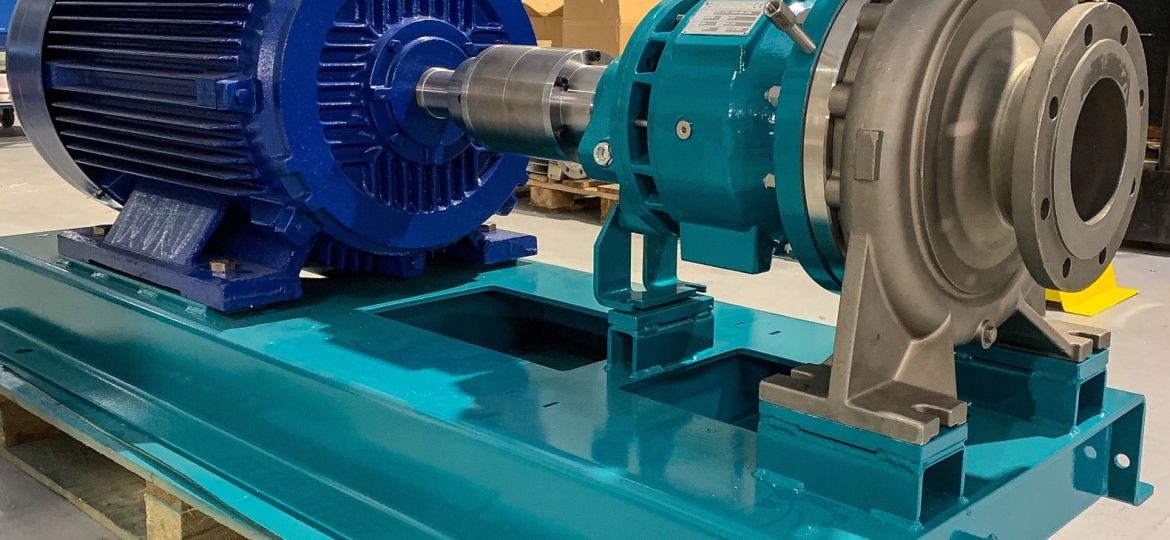
When a pump is installed, the coupling and motor must be perfectly aligned on the base. Although this may seem like a mere formality, it is actually an essential requirement to avoid issues that can affect the entire system. This is why CDR Pompe—long committed to guaranteeing high reliability standards—offers specialized assistance even during this delicate phase, reflecting the consultative and technical approach that has always distinguished each of our projects.
WHAT CENTRIFUGAL PUMP ALIGNMENT IS AND HOW IT IS PERFORMED
Pump alignment consists of precisely positioning the pump shaft relative to the motor shaft so that power transmission occurs without abnormal stress. There are two main types of alignment:
-
Angular alignment, concerning the relative inclination of the shafts.
-
Parallel alignment, concerning the lateral displacement between the two axes.
The operation can be performed using traditional tools, such as straightedges and feeler gauges, or with advanced techniques that use precision laser systems. Laser alignment, now considered the standard in highly structured and complex industrial environments, allows for extremely small error margins and ensures reliable and repeatable measurements.
Performing proper alignment is therefore a fully technical procedure—an actual investment in reliability that helps companies prevent failures, reduce vibration caused by component play, and improve the overall energy efficiency of the system.
CONSEQUENCES OF POOR ALIGNMENT
Given its importance in the pump’s life cycle and its possible impact on the entire system, ignoring or neglecting alignment can lead to very serious consequences. The most common issues include:
-
Abnormal vibrations that accelerate bearing wear and compromise system stability;
-
Component damage, possibly resulting in premature failures;
-
Reduced energy efficiency, leading to increased consumption;
-
Unexpected production shutdowns, causing direct and indirect costs.
Especially in complex industrial environments, where multiple machines and instruments must operate in sync, even minimal alignment deviations can become critical, affecting safety, productivity, and the service life of both the component and the system as a whole. For this reason, alignment should not be treated as an optional or secondary operation, but as an integral part of good preventive maintenance practices.
SERVICE DEPARTMENT AND KICK-OFF MEETING: ADDED VALUE FOR PUMP ALIGNMENT
CDR has established an internal Service department equipped for receiving, diagnosing, repairing, testing, and reconditioning pumps. The operational facility and validated procedures allow the team to handle both damaged pumps and sensitive systems with stringent safety and traceability requirements.
The Service department performs dimensional inspections, failure analyses, and complete testing, and also provides on-site interventions for verification and adjustments directly in the plant. In particular, on-site support includes checking the base positioning and finalizing pump alignment using precision instruments. This approach reduces downtime and minimizes the need for corrective interventions.
Preventive added value comes from the kick-off meeting. Before the pump enters production or is delivered, CDR and the customer jointly define all design constraints, operating parameters, testing procedures, and required support services, including the possible presence of CDR technicians during installation and commissioning to ensure correct alignment right from the first setup.
This integration of contractual definition (kick-off), production activities, and post-sales service (Service department) creates a shared pathway with the customer, ensuring that tolerances, vibration limits, and acceptance criteria are agreed upon and verified in the field.
Furthermore, CDR’s scheduled maintenance contracts may include periodic alignment checks during installation and throughout the control plans, turning pump alignment into a planned and traceable activity supported by technical reports.
PUMP SERIES INVOLVED: UTS, UCL, CCL, XTS, XTN, DTN
These pump series have characteristics that make alignment control particularly important during installation and operation.
-
UTS (magnetic drive pumps in steel with closed or open impeller, designed for heavy-duty processes, high temperatures, or 24/7 continuous conditions) require tight tolerances, especially in high-temperature configurations. Poor alignment may cause abnormal loads on magnetic supports.
-
UCL and CCL (mechanical seal pumps with plastic/fluoroplastic-lined components such as PP/PVDF/PFA) require attention both in the power transmission between shaft and coupling and in protecting the mechanical seal: improper alignment increases component stress and wear, compromising sealing and process safety.
-
XTS / XTN (steel, plastic, or lined versions for aggressive fluids or solids-laden liquids) and DTN (high-performance configurations for continuous-duty processes) are used in critical applications where reliability and operational continuity are essential: maintaining alignment over time is crucial to avoid vibrations and preserve system efficiency, especially under variable loads.
For these families, CDR provides technical brochures and catalogues with operating data and application guidelines to support the selection of the correct mechanical layout.
CDR SUPPORT FOR PUMP ALIGNMENT
Pump alignment is a condition that determines the reliability of the entire system. Accurate installation, precise verification, and support from a qualified partner such as CDR Pompe help prevent failures, reduce maintenance costs, and ensure continuous production.
Thanks to dedicated maintenance contracts, the Service department, and the constant attention applied from the kick-off stage onward, CDR Pompe offers clients an integrated approach that combines technical expertise with long-term vision.
Learn more about CDR’s services and request personalized support to ensure the correct alignment of your pump and maximize your system’s reliability.