
TLDR
- The alignment of a centrifugal pump places the pump shaft relative to that of the engine, so the power is transmitted without abnormal stresses.
- The two main types are angular alignment, based on the relative inclination of the trees, and parallel alignment, based on the lateral displacement between the two axes.
- Laser alignment is the standard in more structured installations and offers very small error margins and repeatable measurements, unlike rulers and thickness gauges.
- An incorrect alignment causes vibrations, wear of the bearings, premature breakdowns, increased energy consumption, and unexpected production stops.
- The CDR Service department provides on-site inspections; the kick-off meeting defines tolerances and acceptance criteria; and maintenance contracts can include periodic checks with technical reports.
Index
Why is proper centrifugal pump alignment important
The proper alignment of a centrifugal pump is one of the most important steps to ensure its efficiency, safety, and a long service life. In addition to directly affecting performance quality, system stability, and mechanical integrity of components, it also decisively impacts operational continuity of plants and reduction of maintenance costs.
When a pump is installed, The coupling and motor must be perfectly aligned on the base. This principle, which might seem like a mere formality, actually represents an indispensable condition for avoiding problems that can impact the entire system. It is precisely for this reason that CDR Pompe, always committed to ensuring high standards of reliability, offers its customers specialized support services even in this delicate phase, confirming the type of consultative and technical approach that has always characterized our projects.
What is centrifugal pump alignment and how is it performed
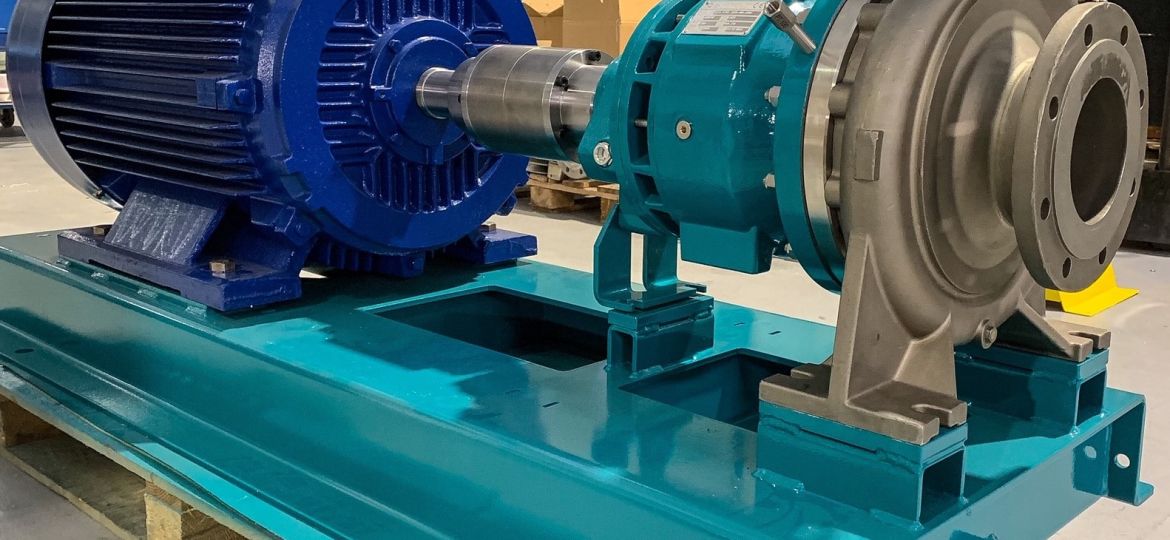
Pump alignment consists of precisely positioning the pump shaft with respect to the motor shaft, so that power transmission occurs without abnormal stress. There are two main types of alignment:
- Angular alignment, which concerns the relative inclination of the shafts.
- Parallel alignment, which concerns lateral displacement between the two axes.
The operation can be performed using traditional tools, such as rulers and feeler gauges, or with advanced techniques that employ precision laser systems. Laser alignment, currently considered the standard in the most structured and complex industrial environments, allows for extremely small error margins and ensures reliable and, above all, repeatable measurements.
Proper alignment of a centrifugal pump is therefore a technical procedure in every respect, a real investment in terms of reliability that allows the company to prevent failures, reduce vibrations caused by play between components, and improve the total energy efficiency of the system.
The consequences of misalignment
Given its importance in the pump's lifecycle and the possible repercussions on the entire system, ignoring or neglecting alignment can lead to very serious consequences. The most common repercussions include:
- Abnormal pump vibrations, which accelerate bearing wear and compromise system stability;
- Component damage, with possible premature breakages;
- Reduction of energy efficiency, resulting in increased consumption;
- Unforeseen production interruptions, which generate direct and indirect costs for the company.
Especially in the production departments of complex infrastructure, where various machines and tools must work in unison, Even a minimal deviation in alignment can turn into a critical issue that impacts safety, productivity, and the useful life of the component and the plant in general. This is why it is crucial to pay great attention to the correct alignment of a pump, not to be considered a secondary operation that can be overlooked, but an integral part of good preventive maintenance practices.
Service Department and Kick-off Meeting: Added Value for Pump Alignment
CDR has internally structured a Dedicated Service Delivery with a equipped area for reception, diagnosis, repair, testing, and recommissioning of pumps. The operational headquarters and proven procedures allow us to manage both damaged pumps and sensitive systems with high safety and traceability requirements.
The Service department performs dimensional inspections, failure cause analyses, and complete testing, and also provides on-site interventions for checks and adjustments directly at the plant. Specifically, on-site support includes verification of the base positioning and the finalization of pump alignment with precision instruments. This approach reduces downtime and limits the need for subsequent corrective actions.
The added value in the preventive phase comes instead from kick-off meeting. Before the pump enters production or is delivered, CDR and the customer jointly define all design constraints, operating parameters, testing procedures, and required after-sales services.,including the possible presence of CDR technicians during assembly and startup to ensure the correct alignment of a pump already in its initial installation.
This integration between the contractual definition (kick-off), production activity, and post-sales service (Service department) creates a truly shared journey with the client, in such a way as to ensure that tolerances, vibration limits, and acceptance criteria shall be agreed upon and verified in the field.
Furthermore, CDR's scheduled maintenance contracts can include periodic alignment checks at the time of installation and during the maintenance plans., turning pump alignment into a planned and tracked activity with supporting technical reports.
The affected pumps: UTS, UCL, CCL, XTS, XTN, DTN
The indicated pump series have characteristics that make alignment control particularly relevant during installation and operation. UTS (Magnetic drive pump made of steel, with closed or open impeller, for heavy-duty processes, high temperatures, or 24/7 continuous operation) requires open tolerances, especially in high-temperature configurations. Inaccurate alignment can therefore lead to abnormal loads on the magnetic bearings.
The UCL e CCL (mechanical seal pumps with parts coated in plastic/fluoroplastic materials such as PP/PVDF/PFArequire attention for both transmission between shaft and coupling and for the protection of the mechanical seal: misalignment increases stress on the components and accelerates wear, compromising the seal and process safety.
Series XTS / XTN (versions in steel or plastic, coated, designed for aggressive or solids-containing fluidsand the DTN (High-performance configurations for process continuity) are used in critical applications where reliability and operational continuity are paramount: maintaining alignment over time is crucial to avoid vibrations and preserve system efficiency, especially under variable load conditions. For these families, CDR provides technical brochures and catalogs with operating data and application guidelines that support the choice of the correct mechanical layout.
Support for pump alignment with CDR
The alignment of a pump is a condition that determines the reliability of the entire system. Proper installation, thorough inspection, and the support of a qualified partner like CDR Pompe help prevent breakdowns, reduce maintenance costs, and ensure uninterrupted production.
Thanks to dedicated maintenance contracts, its Service Department, and the constant attention it has given to projects since the kick-off phase, CDR Pompe offers its customers an integrated approach that combines technical expertise with a long-term vision.
Learn more about CDR services and Request personalized assistance to ensure the proper alignment of your pump and maximize the reliability of your system.
Frequently Asked Questions
What is the alignment of a centrifugal pump and why is it important?
The alignment of a centrifugal pump is the precise positioning of the pump shaft relative to that of the motor, so that the power is transmitted without abnormal stresses. This is important because it guarantees efficiency, safety, and long life of the components, and reduces maintenance costs and plant downtime.
What is the difference between angular alignment and parallel alignment of a pump?
Angular alignment refers to the relative tilt between the pump shaft and the engine shaft. Parallel alignment, on the other hand, refers to the lateral displacement between the two axes. Both deviations must be verified and corrected, because each can generate abnormal stresses on the joint, the bearings, and the power transmission system.
Is laser alignment better than that with a ruler and a thickness gauge for a centrifugal pump?
Laser alignment is considered the standard in the most structured and complex industrial environments. It guarantees extremely low error margins and reliable, repeatable measurement. Rulers and thickness gauges are traditional tools that can still be used, but offer less precision than laser systems.
What are the consequences of a centrifugal pump that is not aligned correctly?
An unaligned pump generates abnormal vibrations that accelerate bearing wear and compromise the stability of the system. Damage to components can occur with premature breakdowns, a drop in energy efficiency with higher consumption, and unexpected disruptions in production, which result in direct and indirect costs for the company.
How does it support CDR Pompe the pump alignment during installation and maintenance?
CDR Pompe It supports alignment with the Service department, which performs inspections, tests, and on-site interventions to verify the base and finalize the alignment using precision tools. In the kick-off meeting, tolerances and services, including technical installation and commissioning, are agreed upon. Maintenance contracts may include periodic inspections with reports.
Which CDR pumps are more sensitive to the alignment between the pump and the motor?
The UTS, UCL, CCL XTS, XTN and DTN series require particular attention to alignment. In the UTS at magnetic drive, an inaccurate alignment creates abnormal loads on the magnetic supports, especially at high temperatures. In the UCL and CCL at mechanical seal, the error accelerates wear and compromises the process’s stability and safety.