
Skip to main content Scroll Top

Category: News

News

The in-depth know-how we have acquired over the years allows us to offer a wide range of pumps, customized to meet the diverse needs of industrial applications. In particular, we are able to supply pumps in various materials, including PP (polypropylene), PVDF (polyvinylidene fluoride), and PFA (perfluoroalkoxy), depending on the specific process requirements and the type of fluid to be handled.
CDR Pompe In-Person Exams: Reliability, Oversight, and Transparency
Proctored test

Nel settore dell’ingegneria di processo e della movimentazione dei fluidi, la fase di collaudo rappresenta un momento chiave per garantire l’efficienza, la sicurezza e la conformità di ogni fornitura.

AEO Certification: CDR POMPE Boosts Competitiveness

Siamo lieti di annunciare che, finalmente, CDR POMPE ha ottenuto la certificazione AEO (Authorized Economic Operator), un riconoscimento ufficiale rilasciato dalle autorità doganali che attesta l’affidabilità e la conformità dell’azienda sotto il profilo doganale

CDR Pompe Invests in Training: Funding Secured to Expand Our Team
CDR Company - CDR Pumps

CDR Pompe è da sempre attenta alla crescita e al benessere delle persone che lavorano con noi. Per questo siamo…
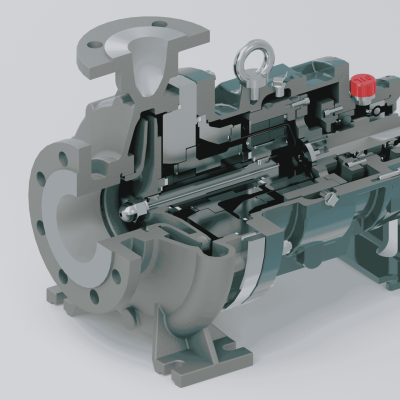
Typical centrifugal pump failures: causes, impacts, and prevention
As key components for fluid transfer in sectors such as chemical, oil and gas, and water treatment, a company must not only select a high-quality pump but also be able to anticipate signs of wear, foresee critical situations, and ensure proper operating conditions. Typical failures in a centrifugal pump—such as dry running, cavitation, and shut-off—are not mere hiccups: they are symptoms of a mechanical, thermal, or hydraulic imbalance that often stems from suboptimal system design, a lack of monitoring systems, or operating cycles that fall outside specifications. Thoroughly analyzing these operational issues means learning to prevent them with technical precision, avoiding the progressive degradation of impellers, seals, bearings, and magnetic supports. It also means designing smarter systems capable of protecting themselves through the integration of sensors, advanced materials, and electronic controls. At CDR, we are well acquainted with the typical failures of a centrifugal pump, and our departments are constantly working to ensure products that are increasingly safe, durable, and efficient.  TYPICAL FAILURES OF A CENTRIFUGAL PUMP: CRITICAL ISSUES AND AN INTEGRATED APPROACH TO PREVENTION It is important to note that these two failures (dry running, cavitation, and shut-off) often do not occur as isolated phenomena. For example, a system prone to cavitation may experience dry running due to a consequent lack of circulating fluid in the system; similarly, a malfunction of the suction valve can create conditions that foreshadow a dry-running failure. The best form of prevention for any type of technical or mechanical failure therefore consists of careful design and timely monitoring of the system: the use of level detection and energy absorption systems, as well as bypass valves, constitutes a structured strategy to prevent uncontrolled increases in pressure, temperature, consumption, and internal degradation. DRY RUNNING: WHY IT’S A PROBLEM AND HOW TO PREVENT IT Dry running is one of the typical failures of a centrifugal pump. This condition occurs when the pump operates without liquid or with inadequate lubrication. Under these conditions, the pump loses the necessary cooling, and the internal components—which are normally lubricated—experience direct friction, leading to overheating. Most pumps, including CDR models, are not designed for this scenario: while some configurations with excellent wear resistance—such as those made of diamond-coated silicon carbide or graphite—may withstand brief periods without liquid, these are not substitutes for proper design and use. Typical consequences include increased power consumption up to the point of thermal overload, deformation of internal plastic components, and, in the most severe cases, failure of the pump housing itself due to severe friction. Prolonged dry running can also lead to total pump failure. To prevent serious failures such as dry running, it is essential to integrate control systems such as discharge pressure gauges, flow meters, and level switches that detect the absence or shortage of fluid. Furthermore, installing equipment such as watt-hour relays provides an additional level of protection, as they detect abnormal increases in electrical consumption—a sign of possible dry running. CAVITATION: THE INVISIBLE FORM OF WEAR THAT ERODES EFFICIENCY Cavitation is one of the most dangerous types of failure for a centrifugal pump. It occurs when the pressure in the suction line drops below the fluid’s vapor pressure, causing vapor bubbles to form: as pressure increases, these bubbles implode, generating micro-impacts that are highly erosive to internal components. Cavitation in a pump can have serious consequences, such as excessive vibration and a significant reduction in operational efficiency, with major impacts on flow rate and head. Structurally, these implosions can erode the impeller blades and damage seals and housings, leading to sudden and costly failures. One of the most effective ways to prevent and control cavitation is to rely on the NPSH (Net Positive Suction Head) parameter. The ideal condition is for the available NPSH (NPSHa)—determined by the pressure at the suction point, pipeline losses, and fluid temperature—to consistently exceed the NPSH required (NPSHr) by the pump. To ensure this margin, solutions range from reducing pressure drops in the suction piping to optimally positioning liquid sources (such as tanks located higher than the pump), to the possible integration of boosters or inducers.  SHUT-OFF: THE INSIDIOUS FAILURE CAUSED BY A CLOSED VALVE Shut-off—or a closed discharge valve while the pump is running—is another common failure mode in a centrifugal pump that can lead to significant malfunctions. In a shut-off condition, since the fluid cannot flow into the discharge line, it begins to recirculate internally within the pump. This results in an increase in internal temperature and the gradual vaporization of the liquid. This condition can be caused by: the discharge valve closing while the pump is running; or a pressure drop in the discharge line greater than the head the pump is designed to deliver. Although not as immediate as in dry running, the end result is similar: overheating and loss of lubrication damage plastic components, while seals and bushings gradually fail until they break. The installation of a bypass or pressure switches is one of the most effective technical and structural solutions to prevent the damage from becoming irreversible. CDR POMPE: RELIABILITY, EXPERTISE, AND INNOVATION TO COMBAT TYPICAL FAILURES IN CENTRIFUGAL PUMPS Thanks to an advanced technical consulting service, CDR Pompe assists in selecting the most appropriate configuration, ensuring optimal installation, and implementing the best strategies for preventing failures. Our product line is specifically designed to operate in harsh environments and offers various special configurations, such as diamond-coated silicon carbide, along with the continuous development of new materials like zirconium oxide. typical centrifugal pump failures

Un’azienda non è tenuta solo alla scelta di una buona pompa, ma anche al saper leggere con anticipo i segnali di usura, prevedere i contesti critici e predisporre le giuste condizioni di funzionamento.

CDR Pompe is participating in ChemConnect Italia 2025

Si è conclusa positivamente la fiera ChemConnect Italia 2025, tenutasi per la prima volta nel nostro Paese.

Centrifugal Pumps for the Pharmaceutical Sector: CDR's X Series
ChatGPT Image July 16, 2026, 01_53_18

Among CDR's products for the industrial sector and the chemical industry, centrifugal pumps for the pharmaceutical sector represent our company's main product line.

Centrifugal pump: top of the line for high-flow applications
centrifugal pump

Uno degli elementi distintivi della nostra azienda è la possibilità di offrire soluzioni altamente personalizzate, sviluppate su misura in base alle specifiche applicazioni e alle condizioni operative di ogni singolo cliente.

CDR peripheral pumps for small industrial plants
peripheral pumps

Le pompe periferiche sono una soluzione versatile e affidabile quando è richiesto il pompaggio di fluidi chiari e puliti.

CDR Pompe: Two New Partnerships for the United Arab Emirates Market
CDR Pompe

CDR Pompe è fiera di ufficializzare le nuove partnership con Al Hamad Companies e Powergas Oilfield Equipment Trading LLC, che…