
Summary
In the sector of’process engineering and of the fluid handling, the testing phase is crucial for ensuring the efficiency, safety, and compliance of every supply. When we talk about process pumps designed for critical environments and complex production cycles, the possibility of Attended tests becomes indispensable for installers and final clients.
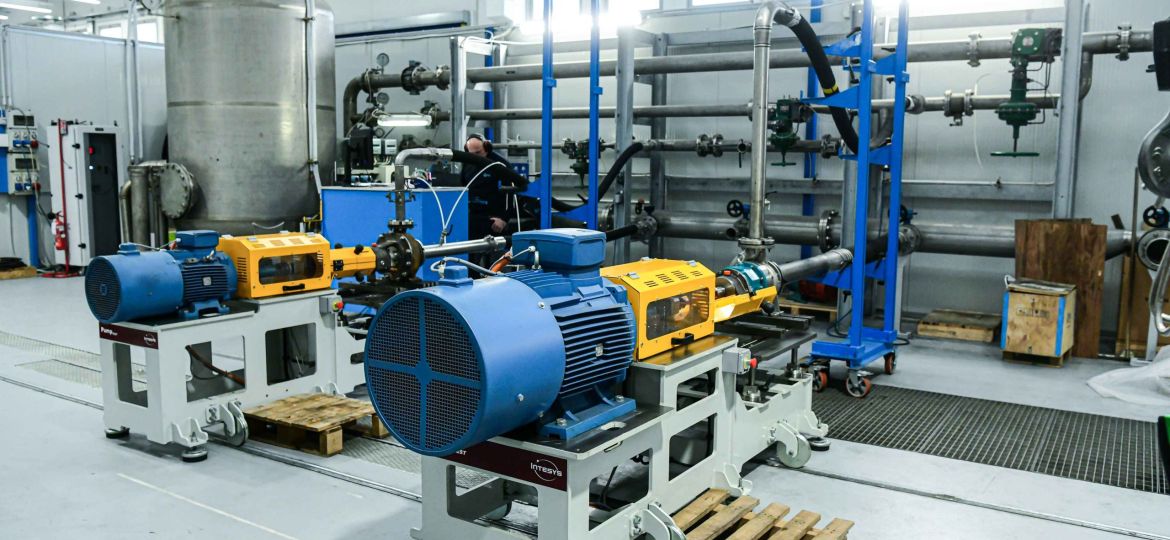
I present tests offered by CDR Pompe They respond to this need with an approach focused on transparency and technical collaboration among all parties involved. The purpose of these tests is not to “see the product working” before it is actually delivered, but rather verify its performance in real-world conditions, according to agreed-upon parameters and with the constant support of a qualified team. This is now a consolidated practice, which strengthens the trust between supplier and client and allows for direct comparison, ensuring full traceability of every stage of the process.
Supervised tests are aimed at anyone who needs to prove their identity or knowledge to a third party.
Attended tests are requested by two main types of stakeholders:
- end customers, that is, companies that will directly use the pumps in their plants;
- installers, which integrate pumps into complex systems commissioned by third parties.
In many cases, at the customer's request, attended tests also include certifying bodies outdoors, chosen and summoned for Check the compliance of the pumps with respect to regulations, technical specifications, or industry standards. The role of the CDR, in these cases, is that of a technical facilitator. who coordinates the procedure, provides all necessary documentation, and ensures the execution of tests in a controlled and professional environment.
The main types of tests performed in person
The in-person tests conducted by CDR Pompe cover a range of hydraulic, mechanical, and electrical tests that are essential for validating the quality and compliance of the pumps prior to delivery. Each test is carried out according to rigorous procedures, with calibrated instrumentation, and under the supervision of specialized technical personnel.
Depending on the specifications requested by the client or the project, it is often possible to combine multiple tests to achieve comprehensive product validation. The ability to witness these checks ensures transparency, traceability, and, above all, full awareness of the machine's real performance under operating conditions.
Working point test
Work point testing allows for simulating pump operation under the precise operating conditions specified in the design. Range and prevalence are faithfully reproduced to verify that the pump meets the exact performance requirements. It is one of the most requested tests by installers and end clients, especially when are the operating conditions critical or highly customized, so that it allows to identify any necessary adjustments and provides certain parameters before commissioning.
This test is performed by default on CDR pumps: once completed and passed, it is recorded in the system and a copy of the results is always sent with the pump.
5-point curve
5-point curve test is intended for Measurement of the pump characteristic curve under five different flow rate conditions: Minimum, intermediate, nominal, maximum, and over-the-door. This test allows for the evaluation of the trend of prevalence, efficiency, and absorption as a function of flow rate, offering a precise snapshot of global performance. It is useful for verifying consistency with project data, detecting any anomalies, and optimizing the pump's integration with the existing system.
Spark Test
The spark test, or scintillation test, is a non-destructive testing used to check the integrity of internal linings, particularly in models with PFA or other anti-corrosion materials. Applying a high electrical potential allows for the detection of micro-holes, discontinuities, or imperfections invisible to the naked eye. This test is essential for applications in chemically aggressive environments, where the integrity of the lining ensures the protection of the pump body and the safety of the system.
Pump body hydrostatic test
The hydrostatic test verifies the structural integrity of the pump body and its connections. The pump is isolated, filled with water, and subjected to static pressure. 1.5 times the maximum allowable working pressure – as per ISO 5199:2005 – for a fixed period of time. During the test, any leaks, deformations, or structural failures are monitored. It is a mandatory test in many regulated industries and is particularly relevant for Pumps designed to work with hazardous fluids, under pressure, or at high temperatures. A positive outcome confirms the robustness and mechanical safety of the entire assembly.
NPSH Test
The NPSH (Net Positive Suction Head) test is used to determine the pump capacity of resist cavitation.During the test, the intake pressure is progressively reduced until the minimum value at which cavitation occurs is identified. This value, called NPSHr (required), is compared against project parameters to ensure an adequate safety margin. It is a technical test, performed only on equipped test benches, and it is particularly requested for critical applications where the suction head is low or the fluid is subject to vaporization.
Procedure, traceability, and technical support
The entire in-person testing process is managed with a structured and transparent approach: clients can, in fact, request tests already during the phase of Commercial offer and such evidence is formally included in the’Initial order. The test date is defined together with the client after receiving the order, taking into account production times and their logistical needs.
During the supervised test, the customer is accompanied by a Commercial Sales Representative, from head of the testing office and from the’Test bench operator, so as to ensure continuous support, technical exchange opportunities, and full visibility into ongoing activities.
Any specific requests are always evaluated by the testing department to verify their feasibility and to integrate any necessary measuring instruments or dedicated configurations.
Final documentation and legal validity of proctored tests
Upon completion of the tests, CDR Pompe issues the following to the customer: official documentation with test results, including charts, measured data, operating conditions, and signature of the technical managers. This documentation can be used for:
- Internal project validation
- Compliance with contractual specifications
- Field testing practices
- Audit or external certifications
Relying on CDR supervised tests means adding a layer of control, customization, and technical dialogue that goes far beyond simple routine testing. It's an opportunity, both for us and for the client, to integrate knowledge, guarantee results, and build tailor-made, certified, and truly ready-to-use supplies.
For more information or to assess the feasibility of a supervised test on your upcoming pumps, you request a dedicated consulting.