
TLDR
- Peripheral pumps generate high pressure with low cost flow rate, reduced size and volume thanks to a impeller multi-cavity design along the edge.
- For projects they require clear and clean liquids, non-corrosive and free of sand or solid impurities, but they tolerate small bubbles of air or dissolved gas.
- The version self-priming draws air from the intake hose during start-up, so the pump can start even if it is not full of water.
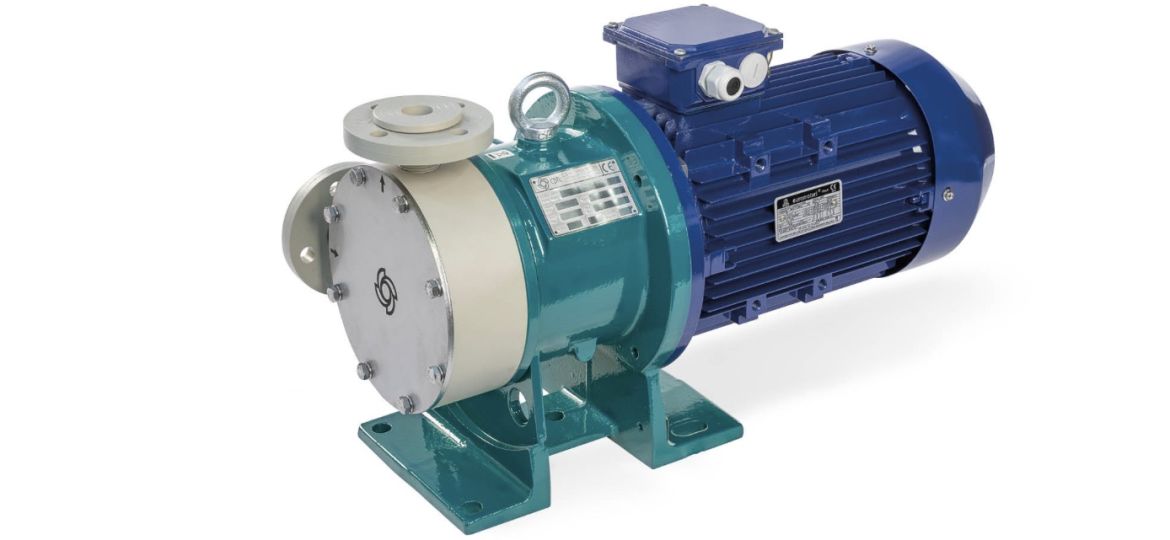
- The CDR HTS is a pump made magnetic drive of steel: maximum pressure 20 bar, flow rate up to 5 m³/h, H series up to 170 m in length total head.
- The CDR HTN is a horizontal turbine pump magnetic drive made of PP or PVDF, with a total head maximum flow of 75 m.
Index
The peripheral pumps I am a versatile and reliable solution when clear and clean fluids need to be pumped. Their ability to generate high pressures with low costs and small footprints makes them ideal in many situations, both in domestic environments and in industrial and agricultural sectors.
CDR offers in its catalog a range of peripheral turbine pumps, usually considered an excellent alternative for both Centrifugal pumps that for those volumetric.
Peripheral pumps: high pressure and low flow rate
The Peripheral pumps are designed to transfer fluids through mechanical movement.. The structure is generally composed of a pump casing, a peripheral impeller, and a series of cavities that allow for fluid movement: these multiple cavities along the edge of the impeller allow the liquid to be moved continuously and uniformly. The particular design of these products minimizes energy losses during fluid transfer, while ensuring high efficiency.
Compared to Centrifugal pumps, in which the liquids pass through the impeller only once, in peripheral pumps they follow a more complex path, allowing for higher pressures to be obtained with a relatively simple mechanical construction.
Specifically, the ability to generate high pressures compared to other pumps in the same category makes them ideal in those situations in which it is required a high total head without the need for a significant flow rate, ensuring precise and controlled fluid transfer.
Advantages, limitations, and practical applications
Although peripheral pumps can also handle fluids with small air bubbles or dissolved gases without excessively compromising performance, Their design guidelines require that the liquids handled be clear and clean, non-corrosive and free from sand or other solid impurities.
Among the main advantages of these pumps are their compactness, low cost, and ability to operate even with small volumes of water: in their version self-describing, meaning with the ability to draw air into the intake pipe during startup, the pump can indeed be put into operation even if it is not full of water.
Regarding practical applications in domestic and civil contexts, Peripheral pumps are widely used for water supply from shallow wells, cisterns, or tanks. They are often used to increase water pressure in the plumbing systems of homes or small apartment buildings, especially in areas where the mains water pressure is insufficient. Another common use is in irrigation systems for gardens and home vegetable patches, where the pressure requirement is moderate but constant.
In the industrial context, however, they are primarily used for the dosing of liquids in production processes, in cooling circuits, and in washing systems where moderate pressures are required. They are also highly valued in laboratories and technical applications where small size and flow accuracy are operational advantages.
The CDR range of peripheral pumps
CDR Pompe offers high-quality and efficient solutions for a wide variety of uses, including domestic environments and small plants.
The HTS pump, for example, is specifically designed for environments where low flow rate but high total head is required (the series H can achieve a total head of 170m). It is a steel magnetic drive pump, available in standard and monobloc execution complete with motor and has a maximum pressure range of 20 bar and a flow rate that can reach 5 m³/h.
Alternatively, in our catalog there is the High blood pressure, the elite among horizontal turbine pumps. Available in both Polypropylene What PVDF (polyvinylidene fluoride), how’HTS utilizes magnetic drive technology and, as long as the HTS, is designed to work extremely effectively in low flow rate and high total head situations (maximum total head 75m).
All our solutions are made tailored to the client's specific needsCDR process pumps are designed according to highest quality standards and guarantee the maximum possible safety of workplaces and extremely high operational efficiency also in the handling of corrosive, toxic, and continuous use liquids. Schedule an appointment with us to get more information about our peripheral pumps: together, we can provide you with the best solution for your company's systems.
Frequently Asked Questions
What is the difference between a peripheral pump and a centrifugal pump?
In the centrifugal pump the liquid passes through the pump only impeller once, whereas in the peripheral pump it follows a more complex path along the cavity walls of the pump impeller. This allows higher pressures to be achieved with a relatively simple mechanical design, while maintaining low flow rates.
For which fluids can a peripheral turbine pump be used?
A peripheral pump is designed for clear and clean fluids, non-corrosive and free from sand or other solid impurities. It can handle small air bubbles or dissolved gases without losing too much performance. For aggressive liquids, dedicated versions are required, such as magnetic drive pumps CDRs made of steel, PP or PVDF.
In which industrial applications is it advisable to choose a peripheral pump for small systems?
Peripheral pumps are suitable when high flow is required total head without excessive pressure flow rate. In industrial applications industrial, they are mainly used for the dosing of liquids in production processes, cooling circuits, and systems for washing at moderate pressures. They are also appreciated in laboratories, where compact dimensions and precise flow rates are essential.
What does a peripheral pump mean self-priming and what advantage does it offer?
A peripheral pump self-priming is capable of drawing air from the suction line during start-up. The advantage is that it can be operated even when it is not completely filled with water. In addition to compactness and low cost, this type of pump is one of its strengths.
What are the characteristics of the HTS pump CDR Pompe?
The HTS is a steel pump for low flow rate and high applications total head. It is available in standard running and complete monoblock versions, with a maximum pressure of 20 bar and flow rate up to 5 m³/h. The H series reaches up to 170 m magnetic drive in height total head.
What materials and performance features does the CDR HTN horizontal turbine pump have?
The HTN is a horizontal turbine pump magnetic drive, available in PP (polypropylene) or PVDF (polyvinylidene fluoride). Like the HTS, it is designed for low flow rate and high pressure applications total head, with a total head maximum of 75 m. It is therefore suitable for small systems with high pressure requirements.